
Animal Communication
Nedda communicates telepathically with your animal companions to foster understanding, and to help you create win/win solutions and a Plan of Action.
Having a Plan of Action reduces overwhelm and provides next steps to help you and your animals achieve your goals.
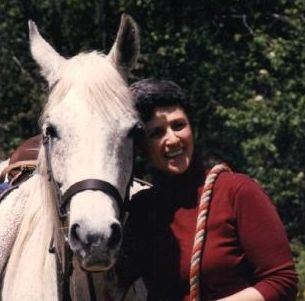
Nedda with Echo, her teacher and companion for 22 years.
Benefits of Animal Communication
Situations Where Animal Communication Can Help.
ANIMALS FIGHTING, or YOU AND AN ANIMAL IN CONFLICT
Feeling frustrated or "at your wit's end" due to conflicts with an animal or among your animal companions?
After identifying the source of the problem by speaking telepathically with the animal(s), steps to restore peace in your home can be identified and implemented.
Guilty feelings about mistakes you believe you made and be forgiven, and everyone can then move on to greater love, peace, and joy.
BEHAVIOR and TRAINING DIFFICULTIES
Are you despairing, frustrated, and/or desperate because of challenges such as litter box/house training issues?
- Does your cat insist on urinating or leaving feces outside the litter box or use furniture and carpeting to sharpen his/her claws?
- Is your dog not responding to house training?
- Does your dog ignore you when you give a command or only responds when s/he feels like it?
Sudden changes in behavior or a failure to pay attention when you give commands may indicate a deeper issue.
Animal Communication helps identify the underlying cause of the behavior, a critical first step towards resolution. Suggestions for you to implement will also be offered.
ILLNESS, INJURY, and PREPARATION FOR SURGERY
Are you worried about your animal due to illness, injury, or an upcoming medical/surgical procedure?
When there has been illness or injury, or when surgery is necessary, Animal Communication facilitates understanding of what will happen, helping to reduce fears, anxieties, and confusion.
1- Clarity reduces confusion about what the veterinarian said and what medical options are available for treatment.
2- Setting clear expectations regarding recovery restrictions help you both prepare for limitations in activity after the surgery/procedure is completed.
3- Your animal companion can be encouraged to give you input and may more readily accept the treatment plan you both choose together.
DEATH, DYING, and CROSSING OVER
Are you fearful, sad, overwhelmed, and grieving because your beloved companion seems to be getting ready to die?
Animal Communication may help you understand what's happening with your companion:
- Is your animal getting ready to leave the physical form?
- What is s/she feeling at this time?
- Does s/he want help?
- What are the signs and signals of imminent departure?
Communicating about the dying process, what your animal needs and wants, and what you are comfortable doing for your friend helps you both feel calmer and more accepting of what's happening The conversation can include euthanasia vs. transitioning naturally, if you so desire.
IN SPIRIT CONVERSATIONS
Are you stuck in grief and heartache, and longing to reach out to your companion who is now in spirit?
You may have things to say to your friend in spirit that were left unsaid when your animal companion was dying.
Animal Communication helps you and other family members say goodbye to the departed. The Emotion Code™ may assist you to move forward in the grieving process.
When needed, an animals can be helped to let go and cross over into the Light.
SHOWS and COMPETITIVE SPORTS
Are you discouraged and frustrated because your show dog, show cat, or performance horse don't perform as expected?
A team effort - an effective partnership - is required for success in obedience, agility, conformation, nose work, show jumping, dressage, combined training and other competitive events for human-animal teams.
Animal Communication helps uncover where the team communication is breaking down.
Techniques to facilitate communication may lead to improvements in the "dance" between willing partners.
BUILDING A STRONGER BOND
Is your heart aching for the animal you're fostering or have adopted because s/he holds back and is fearful of bonding?
Animal Communication is a powerful way to help you and a rescued animal begin restoring trust.
Animals who have been traumatized benefit greatly by being heard. They can sense when you are understanding of their feelings and needs.
Animal Communication teaches the animal that it can share it's feelings without being judged or punished for behaviors it had developed to survive.
When you understand the animal's perspective, it will help you be more patient as you care for and nuture the animal.
" YOU ARE WHAT YOU EAT"
Are you eager to know ways to improve your cat or kitten's diet?
While Nedda is neither a veterinarian nor an animal nutritionist, a review of what you are currently feeding (or not feeding) your animal may reveal some of the underlying causes for illness and behavioral problems. Expanding your knowledge of different approaches to feeding and of dietary supplementation can ease, manage, and/or reverse a variety of situations.
CHANGES IN YOUR LIFE AFFECT YOUR ANIMAL COMPANION
Are you confused and worried by sudden changes in your companion's behavior that leave your veterinarian stumped?
Changes in family life can lead to emotional stress and even health problems for animals. This may be avoided or reduced when you prepare your companion ahead of time in an Animal Communication session.
Some life-changing events are: moving, vacations, new baby, death of a human or animal family member, decision to adopt a new animal, marriage, divorce, teen off to college, kids off to summer camp, and so on.
Explaining in advance helps ease your companion's mind, reduces stress, and help them adjust more easily and rapidly.
Answering their questions and concerns helps everyone feel more relaxed and at ease during and after the change takes place.
What is Animal Communication?
How does Animal Communication work?
You and Nedda and your animal(s) all speak together.
You and Nedda are on the phone or Zoom.
Nedda and your animals speak telepathically with each other.
HOW DOES NEDDA CONNECT WITH MY ANIMAL?
Nedda makes a telepathic energy link with your animal(s) so you and she and they can have a live conversation.
WHAT WILL I EXPERIENCE WHILE NEDDA TALKS TO MY COMPANIONS?
Nedda describes for you whatever she experiences as their responses to your questions. She will also describe for you everything else she experiences psychically during the conversation.
WHAT IF I HAVE MORE THAN ONE ANIMAL?
Your session may include individual conversations with each animal. However, Nedda can also telepathically link with more than one animal simultaneously. This is like a "conference call" where all the animals are connected to her to have a family discussion when that's appropriate.
DO I NEED TO BE WITH MY ANIMAL(S) DURING THE SESSION?
You do not need to be physically with your animal at the time of the session. You may be away on a trip while your animal companions are at home, at day care, at a friend's home, out in a pasture, or even boarding or at the veterinarian's receiving critical care.
DOES IT MATTER HOW FAR AWAY I LIVE FROM NEDDA?
Physical distance is irrelevant to successful telepathic communication, which is instantaneous. Telephone consultations are just as effective as on-site visits, and allow Nedda to be available to more people in a more timely manner.
WITH WHICH TYPES OF ANIMALS CAN NEDDA COMMUNCATE?
All species are welcome. Over the years, Nedda has spoken with llamas, iguanas, snakes, bunnies, cats, dogs, horses, birds, and even a pet tarantulla. Nedda also speaks with Nature Spirits, Trees, Mother Gaia, and other natural forms of Life.
Achieving Your Session Goals
Nedda will ask for your goals at the start of each session to be certain that the session stays on focus.
Nedda's goal is to help you and your animal share perspectives, and to problem-solve by developing a WIN/WIN plan of action that is agreed upon by all concerned. The plan will include "next steps" so you and the animal(s) know what's going to happen.
Both you and the animal will have to make some changes. This is why you both need to participate in creating the plan and both have to agree to the plan.
When an animal agrees to work with you to resolve a situation, a plan for resolution is more likely to succeed.
When you are willing to make changes, your animals are more willing to cooperate with you.
Nedda empowers her clients when speaking to veterinarians to ask questions and gather information that will help them and their animals understand options and make choices appropriate to their situation, values, and viewpoints.
Alternative approaches may be suggested for your and your animal's consideration.
- Alternative approaches are not intended as a substitute for veterinary medicine.
- They are intended to support you and your animal, and many actually require an alternative veterinary physician to perform, such as veterinary acupuncture, chiropractic, and homeopathy.
- Many can be used in conjunction with allopathic and alternative veterinary medicine, such as energy healing, flower essences, changes in diet, and others.
Developing a Plan of Action
When our animals' well-being is involved, we may feel overwhelmed by the situation, and by feelings of guilt, fear, and grief.
In an Animal Communication session, Nedda assists you and your animal to develop a plan of action together. This plan of action will be one that all of you agree contains the best next steps towards resolving whatever is going on.
When you have a plan of action and begin with small steps, you allow for
- exploration,
- evaluation, and
- making adjustments as you go.
When larger steps are required, you will at least agree on what they are and be working towards a mutually agreed upon goal.
This takes some of the pressure off you and your animal companions.
Even if you have never worked with a professional Animal Communicator before, you are likely to find the session comforting, informative, and uplifting. Hopefully, it will also help you feel empowered to move forward towards resolving the situation.
3 Simple Steps to Prepare for Your Session.
1_ Let your animal companions know that Nedda will be speaking to them from a distance.
2_ Make a list of the issues you want to address and the questions you want to ask your animal companions before coming to the session.
3_ Verbally tell your animal that you want them to feel free to communicate whatever they want to say.
What Your Session Includes.
Nedda can speak with more than one animal during your session. Set your priorities so the time is used optimally.
Your session includes:
1_ Reviewing and clarifying background information (first session).
2_ Getting an update on how things are progressing between sessions.
3_ Speaking with you and your animals.
4_ Scanning the animal's body when a health issue is a concern.
5_ Developing a Plan-of-Action, i.e., next steps to move the situation forward.
Read Nedda's policies regarding session length and fees.
Disclaimer - Please read.
Animal Communication is not a substitute for veterinary care.
Nedda Wittels is not a veterinarian and does not "cure," or "treat," or "diagnose" illness or disease in animals.
Consult your veterinarian if you have concerns about your animal's health.
It is up to you to decide whether to share information gathered during an Animal Communication session with your veterinarian.
Nedda Wittels is not trained in animal nutrition.
All information she shares is from her personal experiences seeking high quality diets for her animal companions.
DO YOUR OWN RESEARCH. Make informed decisions on what to feed your animals and how to care for them naturally.
You are responsible for your personal choices and decisions.
No specific result is guaranteed or implied as a result of an Animal Communication session.
Trust is essential between Nedda and your companion.
If your companion tells Nedda something and requests that the information not be shared, Nedda will keep that confidence.
Otherwise, Nedda will share with you whatever your animal companion tells her.
<<< IMPORTANT >>>
Animal Communication is not about telling the animal what to do and expecting them to make changes.
In order for changes to occur in a family situation with animals, the humans have to be willing to make changes as well.
Animal CommunicationTestimonials
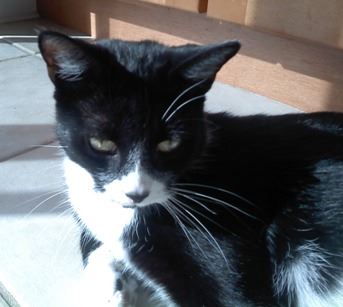
Alane Carter, Rhode Island
Rooper's like a different cat!
Rooper has calmed down. He's showing me affection and allowing me to pet him, and he's asking to go outside with the other cats. There has been no more urinating in the wrong areas. Amazing!
The flower essences you suggested had not yet arrived, so this change is all from your having spoken with him and given him a healing. Thank you so much for your help and for giving this little guy a better quality of life!

Holly Hanchey, Georgia
Jake's discomfort identified; he's now receiving acupuncture treatments.
In conversation with Jake, Nedda pinpointed a twist in his back that he said was causing him pain.
A holistic vet confirmed what Nedda "saw" energetically, and Jake is receiving acupuncture treatments.
I think it would have taken me much longer to figure it out on my own, since he’s so stoic.
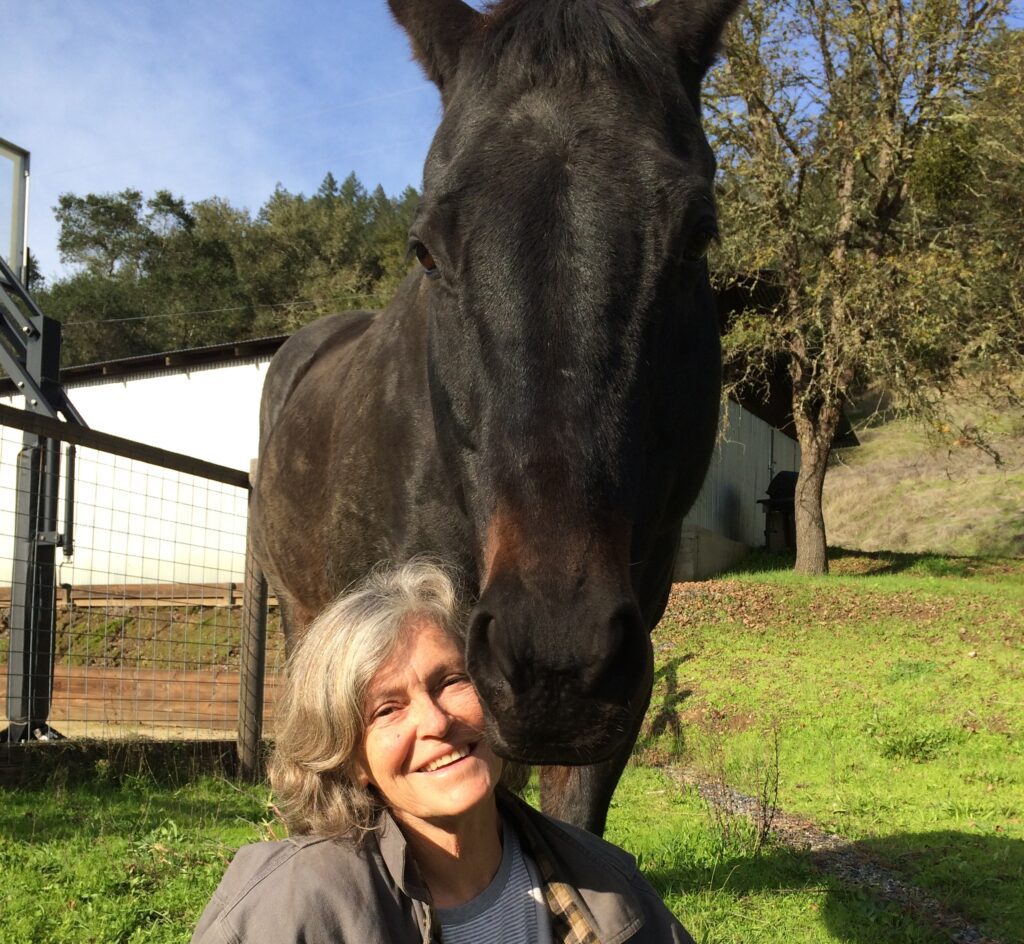
Carol Hale, California
The session was amazing!
I noticed an immediate difference after the session.
Mr. Bug (horse) was calmer and seemed grounded. I let him and the 2 goats out. No snorting or running, and the goats played. Bug was nervous but able to stay in one place, a huge change.
Ursy, the pot-bellied pig, was well behaved, too. He didn’t crowd into my space and no attempts at biting me, as he did before.
Thank you so much.
Angela Markey, Michigan
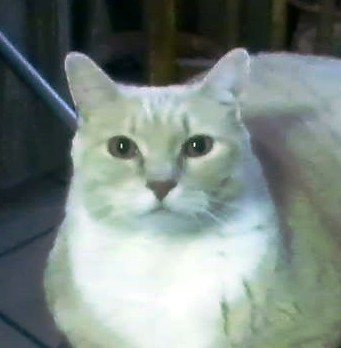
Gotti no longer using the bathtub as a litter box.
Gotti expressed to you that he loved my new male companion, but sometimes he played too rough, and the pooping in the bathtub was his way of trying to get a little revenge. You heard Gotti loud and clear!
My now husband started playing less rough with Gotti and the tub pooping stopped.
Jack Gerster, Connecticut
Purr-cy's litter box problems solved.
Our 12-year old cat had urinated on rugs, furniture, beds, etc. There was no medical reason for this behavior.
The biggest change we made that you suggested was getting a bigger, topless litter box (one of those plastic storage chests). We continue to use the "Comfort Zone" cat pheromone aerator, too. Purr-cy has not had one "accident" since we spoke with you!
Karen Durochia, Pennsylvania
Millie is grieving less and playing more.
Millie is doing much better since our telephone call last Thursday. She has started to take some interest in playing with her toys, and is spending less time sleeping and being sad about Maggie’s death last year.
It was so good to hear from Maggie [in spirit] during our session. I can't tell you how much that meant to me. I really miss her so much. It makes me wonder if she will come back to me someday reincarnated, but I guess that's up to her.
V. P., Connecticut
Rooh, an active, 3-year old Kelpie, is staying home now.
When Rooh started chasing her ball across the street and visiting neighbors, she never looked to see if vehicles were coming. Nedda explained to her what would happen if she and a car ever connected. Nedda also strongly recommended Rooh do agility training for the mental challenge.
Almost immediately after the session Rooh’s behavior improved greatly. Agility classes gave Rooh a focus beyond her duties around our home. Rooh remained a happy dog and was more careful when outside on her own.
L. R. S., New York
Vicious dog fights stopped for good.
We were at our wits end and desperate. Our 2 female dogs, lifelong friends, began fighting when an energetic, good-natured, young male elkhound came into our home. The bull terrier started vicious attacks on the pit bull. Even after the elkhound left, the murderous attacks continued.
Nedda uncovered the reasons for the fighting, and told the terrier to show affection and ask forgiveness of our pit bull.
The terrier got up from under the kitchen table, walked into the family room, and licked the face of our pit bull. I was amazed! The vicious attacks stopped and we had no further incidents.
Courtney Wren Mabbutt, BC, Canada
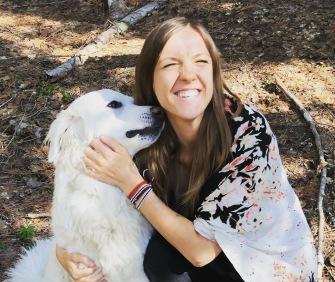
Our 2 cats instantly trusted our dog more after the session.
Nedda helped our animals understand about boundaries, and Anu, our dog, needing to be aware of her size.
We saw an instant shift in how our puppy related with our cats afterwards, and our cats instantly trusted our dog more.
Nedda was clear, fun, informed, so spot on, and very responsive. This felt aligned with our values of holistically and relationally approaching our animals' wellness.
We felt empowered in how we could show up in the process. What a beautiful heart! So grateful to have her on our animal team!!